Style Guide Template
A fashion style guide template is a structured document, typically 24 to 48 pages, that codifies a brand's visual identity into repeatable styling rules covering colour palettes, silhouettes, fabric choices, and photography direction. It ships as a PDF for daily reference by designers, stylists, and marketing teams, and as a print book for clients and partners who need a tangible copy on their desk. The template itself is a fixed skeleton of 12 core sections, from mood boards to a do-and-do-not lookbook, that any fashion label fills in to turn scattered ideas into a single governing document.
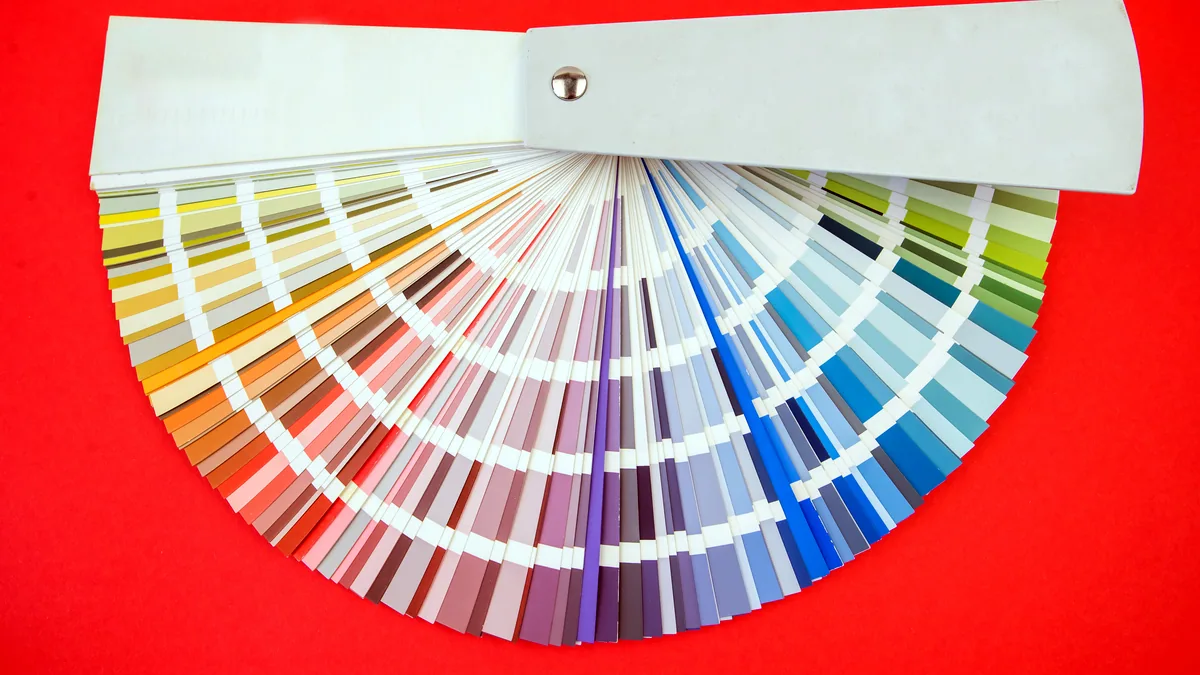
The template works best when it sits alongside the wider Fashion Brand Guide, which covers positioning and business strategy, while the style guide stays focused on the visual layer. Pulling Brand Identity Examples from established labels helps calibrate the tone, and a dedicated Mens Style Guide extends the same framework to menswear lines without starting from scratch.
What a fashion style guide template covers
A fashion style guide template breaks a brand's aesthetic into 12 sections so that every person who touches a product or a photo shoots the same look. The sections move from abstract to concrete: brand story and values, mood boards, colour palette with hex and Pantone codes, silhouette sketches, fabric and material rules, accessory guidelines, typography for on-label print, photography direction, and a closing do-and-do-not lookbook. Each section occupies 2 to 3 pages in the PDF layout, which keeps the full document under 40 pages so a stylist can flip to any rule in seconds during a shoot. The book format adds a 4-page cover spread and a 2-page colophon, bringing the total to roughly 44 pages at a standard 6 by 9 inch trim size.
How to build the template from scratch
To build the template, start with the silhouette page, because every other decision hangs off the shape of the garment. Work through these 6 steps in order:
- Sketch 3 to 5 core silhouettes that define the label, one per category such as outerwear, tailoring, knits and separates
- Assign a primary and secondary colour palette, listing 5 core colours with their hex codes and 2 accent tones
- Specify fabric families, naming the exact composition for each piece, for example 95% merino wool with 5% elastane for a crew-neck sweater
- Set photography direction with 4 fixed poses, a lighting scheme, and a background colour per season
- Write the do-and-do-not page, showing 2 correct and 2 incorrect applications of the palette and silhouette together
- Lock typography and label placement rules, choosing 1 typeface family with 3 weights for all on-garment and packaging print
Each step feeds the next, so the colour choices in step 2 narrow the fabric options in step 3, and the photography direction in step 4 inherits both.
The PDF format and how to use it
The PDF is the working copy that lives on a laptop during production. Export it at 150 dpi for screen use, which keeps the file under 18 MB, or at 300 dpi if the same file doubles as a print proof. Most brands circulate 2 versions: a full-bleed PDF with 12 by 12 inch spreads for the design studio, and a trimmed 8.5 by 11 inch PDF for sales and wholesale partners who read on phones. Embed the colour palette as both RGB and CMYK swatches so the file translates cleanly from screen to print. A single PDF of this kind, properly tagged with bookmarks for all 12 sections, replaces 3 to 4 separate mood boards, colour sheets, and photography briefs that teams used to juggle in email threads.
Designing the book format
The book format is the permanent artefact handed to a retail buyer, a licensing partner, or a new creative director. Spec it as a 44-page saddle-stitched or perfect-bound volume at 6 by 9 inches, printed on 100 gsm uncoated stock with a spot-UV cover in the brand's primary colour. The page sequence mirrors the PDF but adds 4 elements: a full-bleed cover photograph, an inside cover with the brand's 1-sentence manifesto, a table of contents with section thumbnails, and a back-matter page listing every fabric mill and dye house by name. At 44 pages, the book prints at roughly 8 to 12 dollars per unit in a run of 50, which makes it a practical handout rather than a luxury object. Keep the spine plain so the book does not compete with the garment on a shelf.
Template structure and page layout
The layout follows a 2-column grid across every spread, with the left column holding descriptive text and the right column holding the visual reference. Each of the 12 sections uses one of 3 recurring page types, which keeps the document feeling uniform even when the content shifts from colour to photography:
| Page type | Used in sections | Layout rule |
|---|---|---|
| Swatch spread | Colour palette, fabric rules | Left: text and codes; right: 6 square swatches at 1.5 inches each |
| Lookbook spread | Silhouettes, photography, do-and-do-not | Left: 1 model photo or sketch; right: 2 smaller reference photos stacked |
| Rule spread | Brand story, typography, accessories | Full-width text with 1 inset image at 4 by 3 inches, anchored to the margin |
Lock the grid in InDesign or Figma before filling any section, because a single inconsistent margin across 12 spreads is visible at arm's length and undermines the document's authority.
Adapting the template across seasons and lines
The template is a constant; the content inside it rotates. Refresh the colour palette and fabric pages each season, which means rewriting roughly 8 of the 12 sections twice a year for a label doing spring-summer and autumn-winter collections. The brand story, silhouette DNA, typography, and photography direction pages stay fixed for a minimum of 4 years, because those are the elements a customer associates with the label at a glance. When a brand launches a second line, such as a menswear capsule, duplicate the full template and swap the silhouette and photography spreads, keeping the 6 structural sections identical so the two guides read as a family. A well-maintained style guide template, updated on this 2-cycle cadence, stays in active use by the in-house team for 5 to 7 years before a full redesign becomes necessary.