Wardrobe and closet compared
A wardrobe is a piece of furniture, while a closet is a built in room or cavity, and that single difference drives the word choice in the 2 regions that split the term. In British English and across most of Europe the storage space for clothing is called a wardrobe, and in American English it is called a closet. The page compares the two terms in 7 dimensions, so you can say the right thing in any region and pick the right storage solution for the space you actually own.
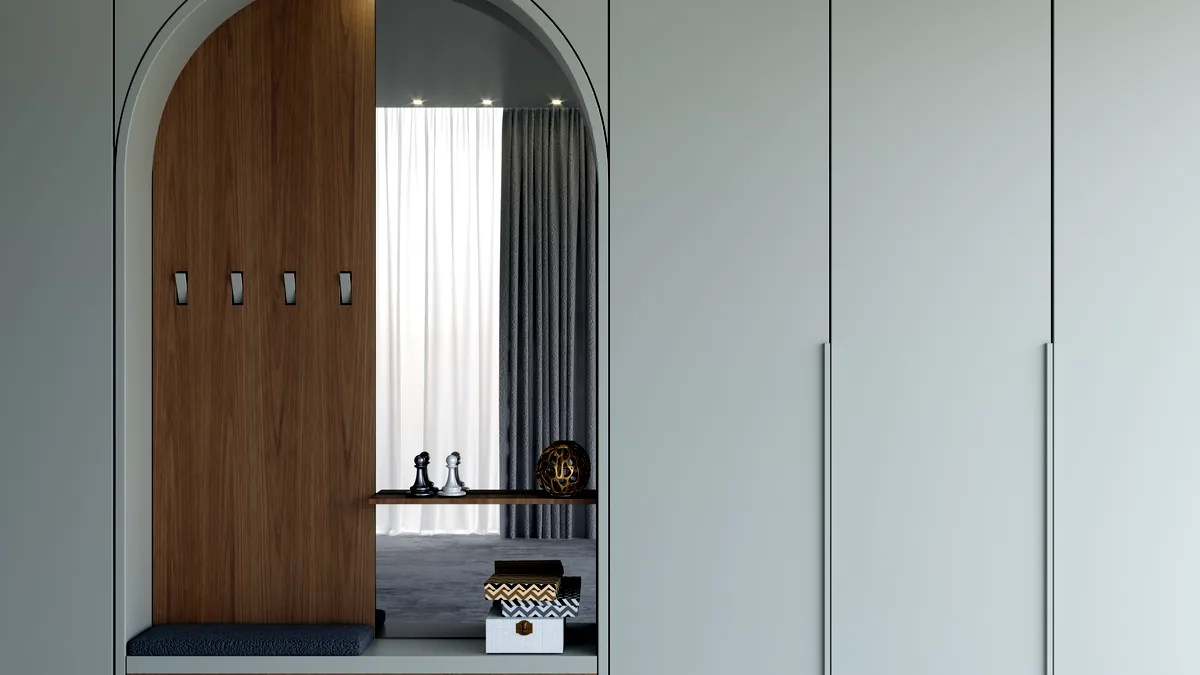
Wardrobe vs closet meaning
The wardrobe vs closet question is a naming split, not a functional one, and the two words point at the same storage task with different shapes. A wardrobe is a freestanding unit with hinged doors, and a closet is a fitted opening or recessed room with hanging space inside. The split lines up with geography. British English, Australian English and most European languages call the storage space a wardrobe, while American English calls it a closet. When you meet the term in a rental listing, a floor plan or a fabric retailer, the region of the seller usually tells you which word is in use.
The split also shows up in what you are looking at. A wardrobe is something you buy, move and replace. A closet is something a builder installs, a decorator refits, or a landlord leaves behind. Because a closet is fixed to the wall, changing it costs more. Because a wardrobe is portable, it can travel with you when you move. The meaning difference is really a difference of ownership and permanence.
What each one is
What a wardrobe is can be pinned down in 3 physical details: a frame, doors and an interior of hanging and shelf space. What a closet is can be pinned down in 2: an opening in a wall and a fitted interior. The table below lines the two up dimension by dimension, and the rows are the dimensions the rest of this page follows.
| Dimension | Wardrobe | Closet |
|---|---|---|
| Type | Freestanding furniture | Built in room or cavity |
| Ownership | You buy and move it | Builder or landlord installs it |
| Doors | Hinged or sliding panels | Swing, sliding or no door |
| Typical size | 90 cm wide and 180 cm tall | 60 cm deep and 210 cm tall |
| Typical price | 150 to 1,500 pounds | 1,000 to 6,000 pounds to refit |
| Portability | Moves with you | Stays with the property |
Where each word is used
Where the word wardrobe is used, and where the word closet is used, depends on the market and the document you are reading. A rental listing in London will say wardrobe and a listing in Chicago will say closet, and both are describing the same 2 m2 of wall storage. A fabric or sewing retailer will sell a wardrobe to the customer who rents and a closet organizer to the customer who owns. The word also leaks into adjacent meanings. A wardrobe can mean the full collection of clothes a person owns, and a closet can mean a hidden personal identity in American English. In British English the hidden meaning does not sit with the word, and the two regions disagree on a second sense too.
- A rental listing: wardrobe in the UK, closet in the US, same object
- A floor plan: wardrobe is drawn as a rectangle in the room, closet as a recessed box
- A furniture store: wardrobe is a SKU with a price, closet organizer is a service
- A personal essay: wardrobe for the collection of clothes, closet for a hidden identity
Size and build differences
Size and build is where the wardrobe vs closet comparison gets concrete, and the numbers differ in ways that change what you can store. A standard wardrobe is 90 to 120 cm wide, 180 cm tall and 55 to 60 cm deep, and a standard closet is 60 to 90 cm deep, 210 cm tall and any width the wall allows. The depth gap is the practical one. A wardrobe at 55 cm deep stores a shirt on a hanger with a few centimetres of door clearance, while a closet at 90 cm deep stores the same shirt with room for a second rail, a drawer bank and a shoe shelf. If you are deciding between the two for a small room, measure the wall first, then the depth, then the number of garments you actually hang.
The build difference matters for the 2 most common failure modes. A wardrobe fails when the wall is not level and the doors stop lining up, which is why a 2 mm shim under the base is the standard fix. A closet fails when the rails sag under the weight of a full rail of coats, which is why a 10 mm steel rail holds more than a 15 mm wooden one. If your wall is load bearing, a wardrobe is the safer bet because you do not cut into it. If your wall is not load bearing, a closet gives you more storage for the same footprint.
Cost and lifespan
Cost and lifespan is the question behind most wardrobe vs closet decisions, and the 2 ranges sit far apart. A new wardrobe costs 150 to 1,500 pounds depending on size and material, and a refitted closet costs 1,000 to 6,000 pounds depending on the number of rails, drawers and doors. The wardrobe pays back faster because you buy it once and it lasts 10 to 15 years with a set of new hinges every 5 years. The closet pays back over the life of the property because the value stays with the house, not with you. If you rent, a wardrobe is the only option and a 300 pound unit with a mirror door is the best value for money. If you own, a closet pays for itself in 7 to 10 years through the resale value it adds to the home.
When each is the right choice
When each is the right choice comes down to 4 conditions, and each condition points to one of the two. A wardrobe is the right choice if you rent, if you move often, if your wall is load bearing, or if your room is under 10 m2. A closet is the right choice if you own, if the wall is not load bearing, if your room is over 12 m2, or if you hang more than 60 garments. The 4 conditions are independent, and you can score your situation against them before you buy anything. If 3 or more of the 4 conditions point to a wardrobe, buy a wardrobe. If 3 or more point to a closet, refit the closet.
- Score whether you rent or own
- Score whether you move more than once in 5 years
- Score whether the wall is load bearing
- Score whether the room is under 10 m2 or over 12 m2
Storing clothes in each
Storing clothes in a wardrobe and storing clothes in a closet are the same task with different constraints, and the constraints change the layout. A wardrobe at 90 cm wide and 180 cm tall holds 30 to 40 hanging garments on a single rail and 20 to 30 folded items on shelves above, and the standard layout is rail in the middle, drawers at the bottom, and a deep shelf at the top for off season items. A closet at 90 cm deep and 210 cm tall holds 60 to 80 hanging garments on a double rail and 40 to 60 folded items on drawers, and the standard layout is a double rail for the daily wear, a drawer bank for the rest, and a shoe shelf at the floor level. The 2 layouts are not interchangeable, because the depth and the height change what fits where.
Building your closet system follows the 3 step method of rail first, drawers second, and shelf last, and the same order applies when you are Building a built in wardrobe because the rail is the anchor and everything else hangs off it. If your space is small, Building a small wardrobe is the right move, and a 60 cm wide unit with a sliding door and a single rail stores 20 to 25 garments without crowding the room. The wardrobe vs closet comparison ends at the storage task, but the next step is the system that fills the storage, and that step is the one that turns a 90 cm wide wardrobe or a 90 cm deep closet into a working system. The next move is to Define your style type, because the storage you choose has to hold the clothes you actually wear, not the clothes you imagine wearing.